
The Many Colors of Squash
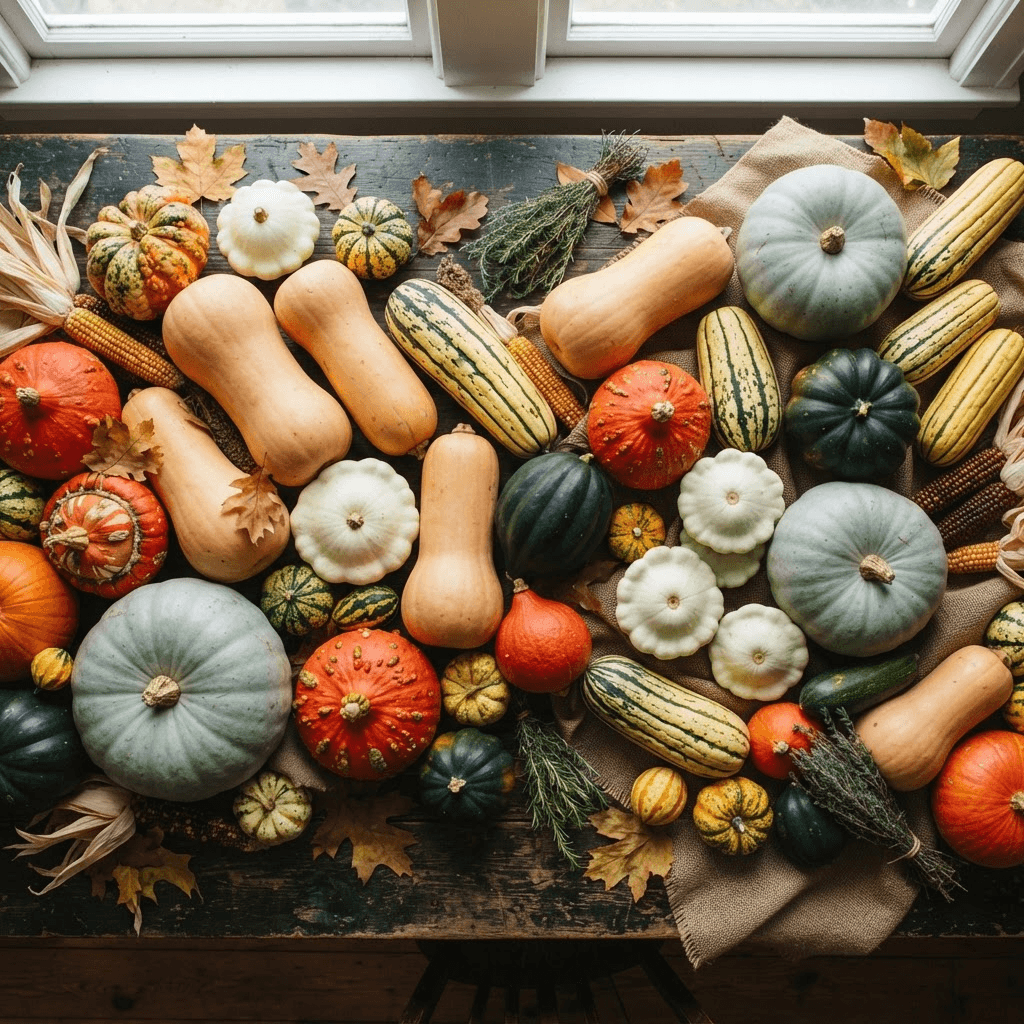
Come September, the market table turns into a painter’s palette — deep blue hubbards, cream-and-green striped delicata, forest-green acorns, and that familiar butternut tan. Each color is a clue to how it tastes and what it wants to become on your stove.
You don’t need all of them. But knowing a few by name means you’ll never stand in the produce aisle guessing again. Here’s our short list, by color.
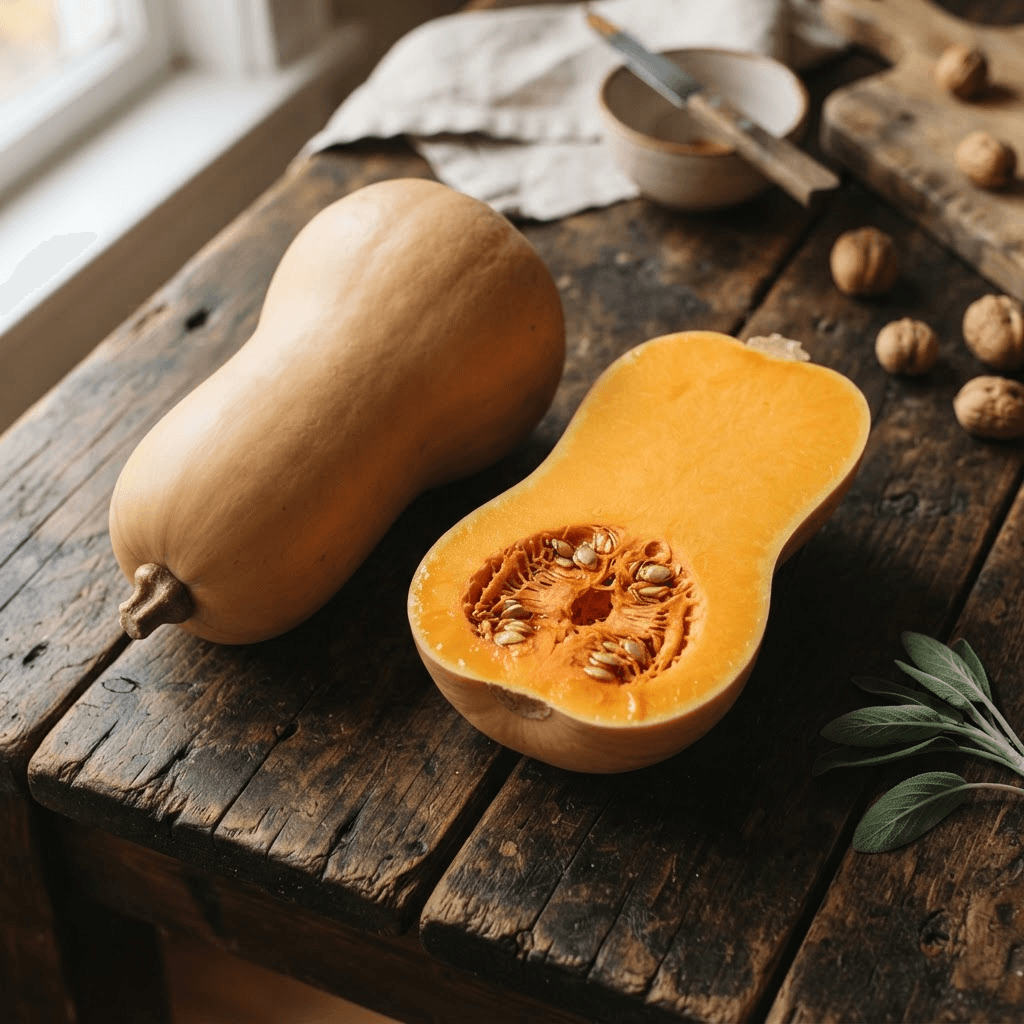
Tan — Butternut
The one everybody knows: smooth tan skin, deep orange flesh, sweet and nutty. It’s the workhorse — roast it, mash it, or blend it into that velvety soup with a grilled cheese on the side. Best from early fall clear through winter, since it stores for months in a cool, dry spot.
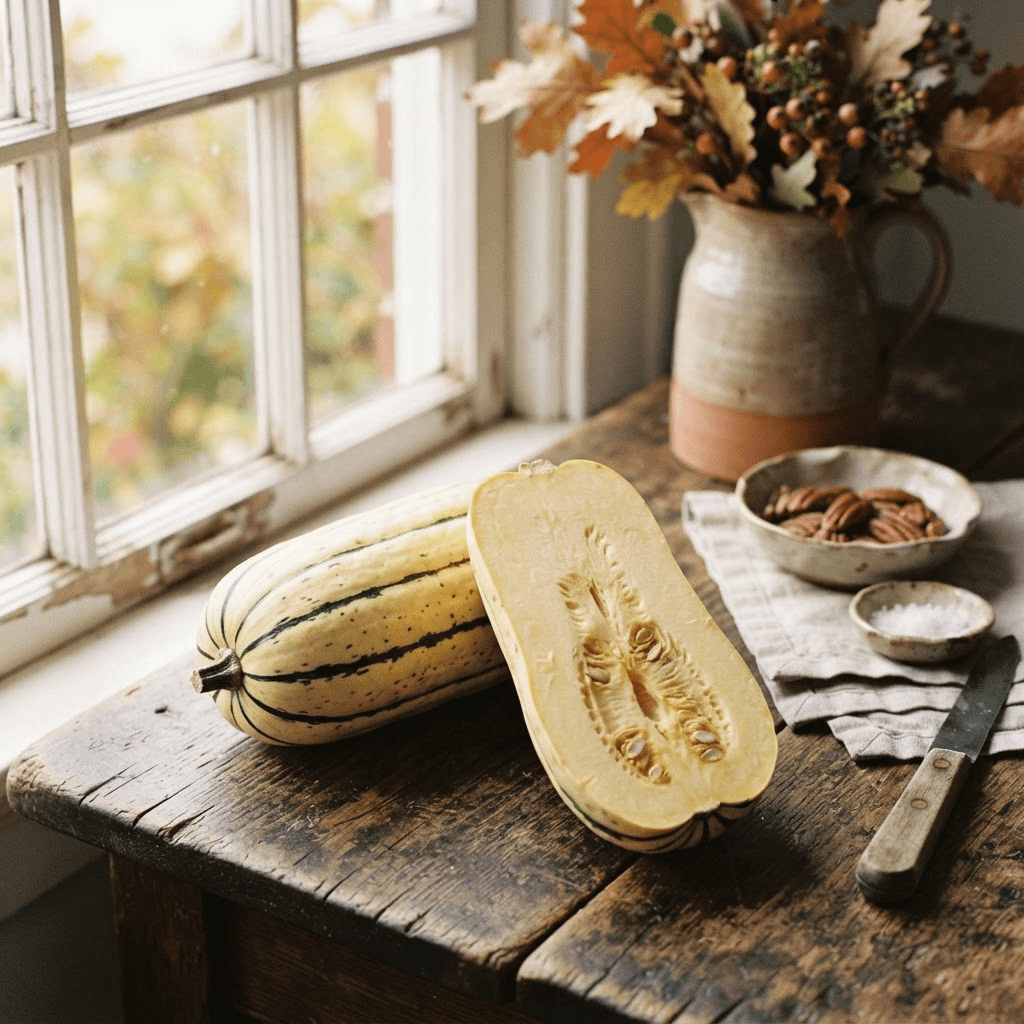
Cream with Green Stripes — Delicata
Small, ridged, and painted cream with green stripes — and the best news for a busy cook: the skin is thin enough to eat. Slice it into half-moon rings, toss with oil, and roast until the edges caramelize. Sweet like a chestnut. Grab it early fall; it’s a thin-skinned one that doesn’t keep long.
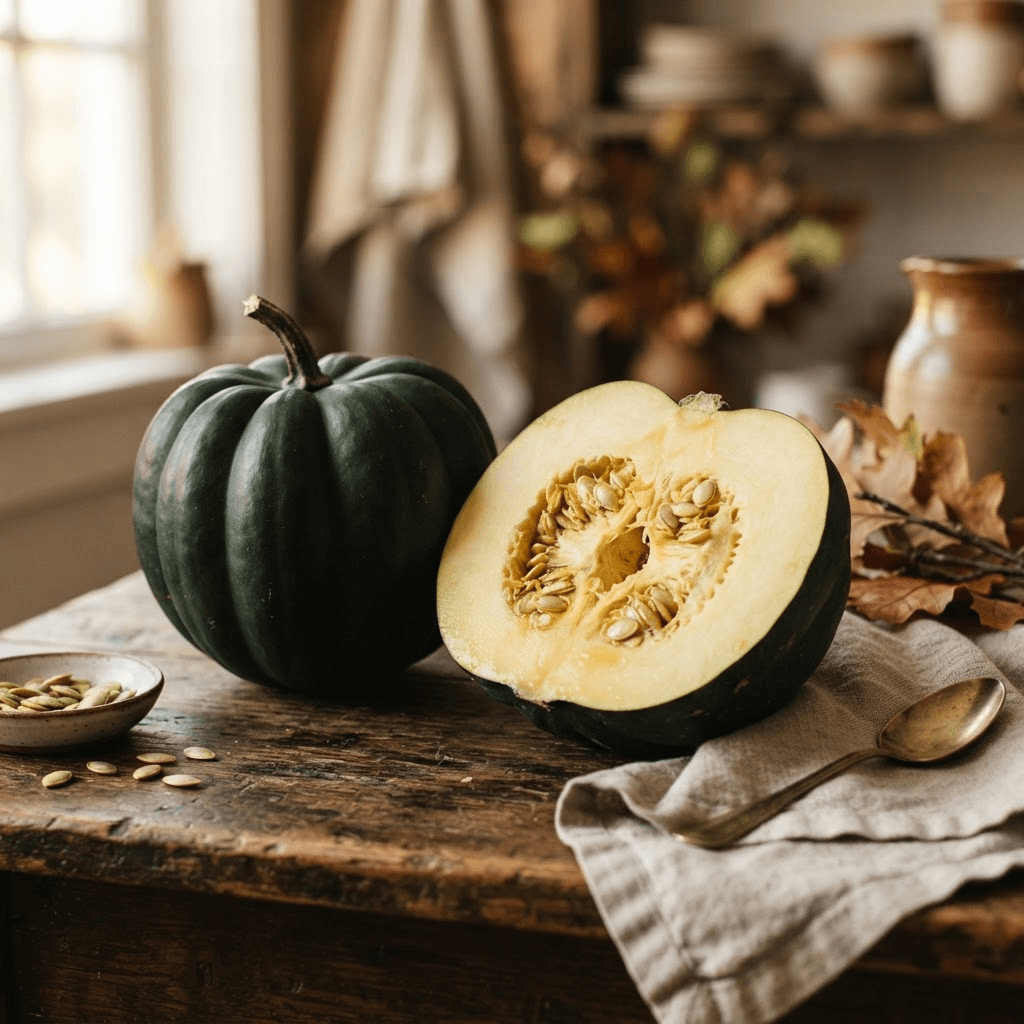
Forest Green — Acorn
Dark green, deeply ribbed, and shaped just like its name. Mild and a little peppery. Halve it, scoop the seeds, and roast the two bowls cut-side down — then fill them with butter and brown sugar, or a savory sausage-and-rice stuffing. At its best in early-to-mid fall.
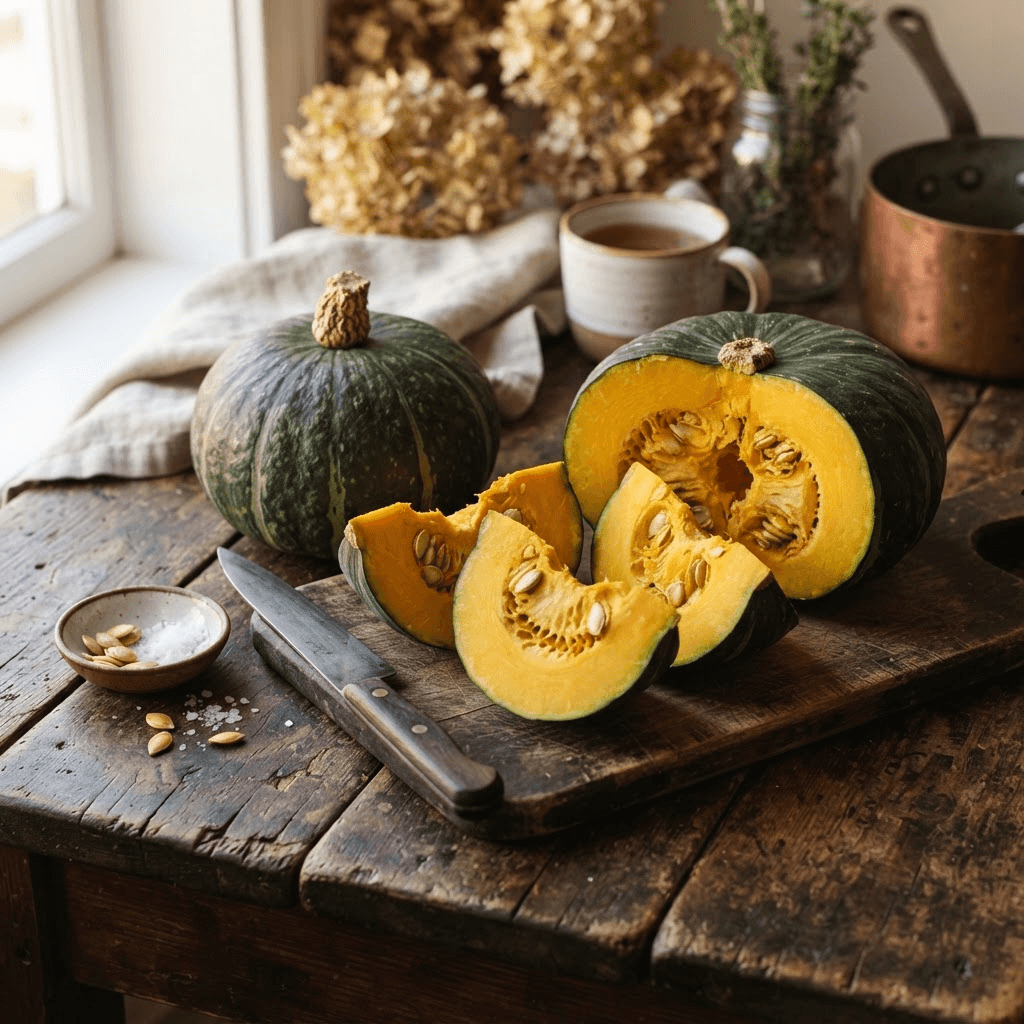
Deep Green — Kabocha
The Japanese pumpkin: squat, deep green (sometimes red-orange), with dense flesh that eats like a cross between sweet potato and chestnut. Roast it in wedges, drop it into curry, or fry it into tempura. Peaks in fall and holds well into winter.
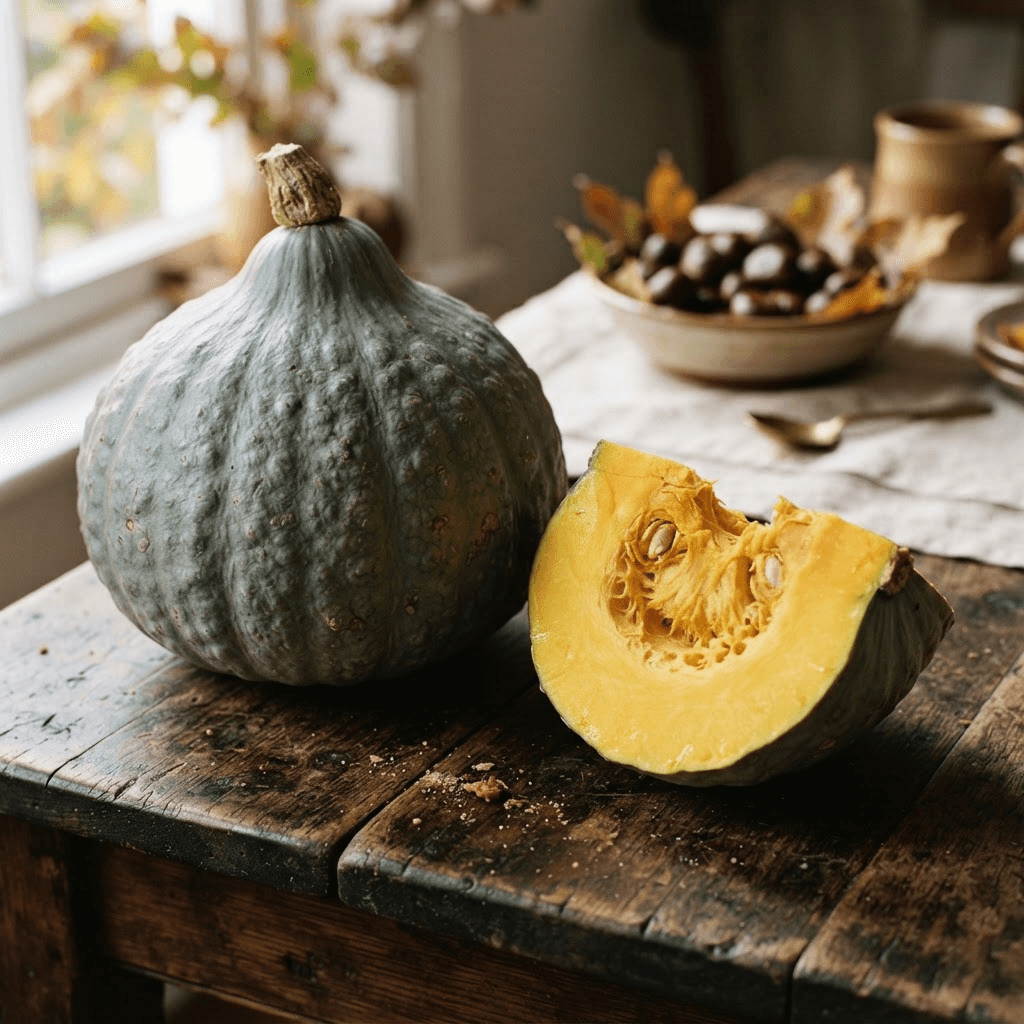
Blue-Gray — Blue Hubbard
The giant of the bin — bumpy, blue-gray, and often sold in wedges because one whole squash can feed a crowd. Rich and starchy, it’s the old-school choice for pie and big-batch soup. A true keeper: cure it and it’ll sit pretty on the counter deep into winter.
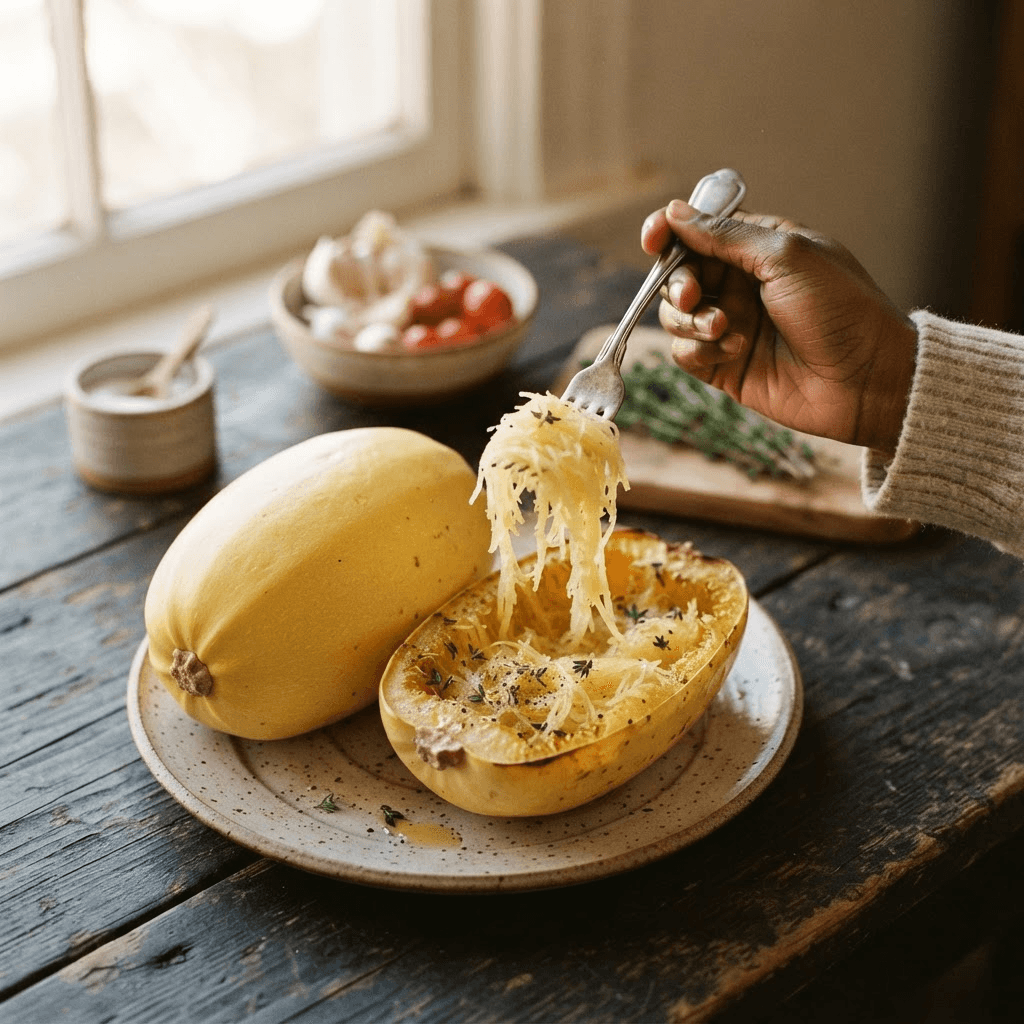
Pale Yellow — Spaghetti
Butter-yellow and oval, with a trick up its sleeve: roast it and the flesh pulls apart into tender strands. Fork them loose and top with marinara, brown butter, or a little garlic and parmesan. A fall staple that stores a good few weeks.
And don’t sleep on the creamy white ones — like white acorn and Casper — same mild, sweet flesh under a ghostly pale skin, pretty enough to leave out as decor before they ever hit the pot.
Join the conversation
Loading comments…